


Elevating Students Van Hiele Geometrical Thinking Using Phase-Based Instruction.

|
VAN HIELE GEOMETRICAL THINKING The van Hiele geometrical thinking is the widely used model to understand and categorizing learners’ (pupils and students) geometrical thinking. The model’s main idea is that learners progress through a sequence of discrete, qualitively different levels of geometric thinking for a particular topic that they confront. To help learners to elevate from one level of geometric thinking to the next level of geometric thinking, phase-based instruction is being used to so. Both the model and instruction were developed by Pierre and Dina van Hiele to help teachers to guide their pupils and students in learning geometry.
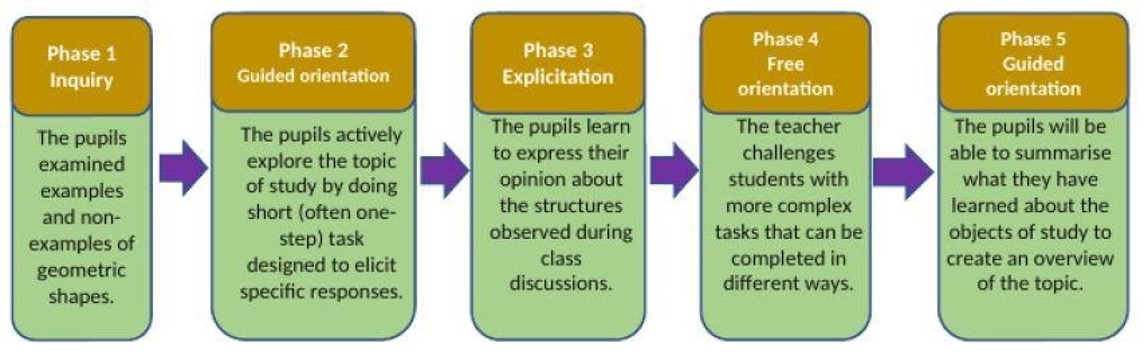
PHASE-BASED INSTRUCTION Phase-based instruction consist of five phases of learning which include Phase 1 (Inquiry), Phase 2 (Guided orientation), Phase 3 (Explicitation), Phase 4 (Free orientation) and Phase 5 (Integration).
TOOLS INCORPORATED WITH PHASE-BASED INSTRUCTION There are many pedagogical tools that can be used as mediator to implement phase-based instruction in helping learners to elevate from one level of geometrical thinking to another level of geometrical thinking.
1. Learning video By using video, learners can make a mental representation from the semantic understanding of geometry lesson and helps them in remembering symbols or pictures naturally. There are some other features of video that make it practical to be used in teaching geometry such as:
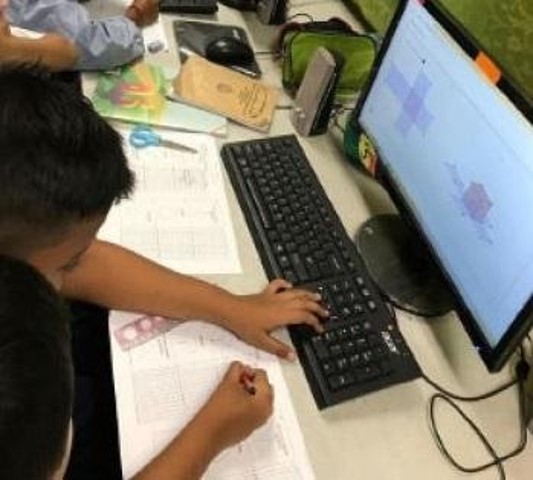
2. GeoGebra GeoGebra is a dynamic geometry software that has been designed to be used to teach geometry topics. GeoGebra can be incorporated with phase-based instruction as this software can demonstrate 3-dimentional and 2-dimentional objects.
3. Geometer’s Sketchpad (GSP) Geometer’s Sketchpad (GSP) is another dynamic geometry software was created by Nicholas Jackiw in 1991. This software has the ability to draw, measure, calculate, and script geometric shapes and figures. By using GSP learners can construct and explore the object by dragging the object with mouse. Learners also can easily create, edit, and manipulate accurate geometrical constructions on the computer screen.
4. Lesson study Lesson study is where teachers collaboratively work on geometry lesson. These are some of the steps in implementing lesson study:
By using lesson study, teachers can design suitable activities by using phase-based instruction to elevate learner’s van Hiele geometrical thinking.
Reference:
|


Start your first discussion